
en
Gary Belsky

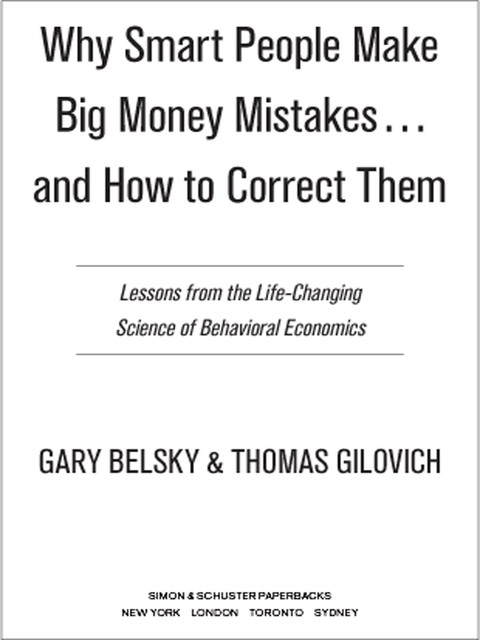
Why Smart People Make Big Money Mistakes and How to Correct Them: Lessons From the Life-Changing Science of Behavioral Economics

Giv mig besked når bogen er tilgængelig
Denne bog er ikke tilgængelig i streaming pt. men du kan uploade din egen epub- eller fb2-fil og læse den sammen med dine andre bøger på Bookmate. Hvordan overfører jeg en bog?
Protect and grow your finances with help from this definitive and practical guide to behavioral economics—revised and updated to reflect new economic realities.
In their fascinating investigation of the ways we handle money, Gary Belsky and Thomas Gilovich reveal the psychological forces—the patterns of thinking and decision making—behind seemingly irrational behavior. They explain why so many otherwise savvy people make foolish financial choices: why investors are too quick to sell winning stocks and too slow to sell losing shares, why home sellers leave money on the table and home buyers don’t get the biggest bang for their buck, why borrowers pay too much credit card interest and savers can’t sock away as much as they’d like, and why so many of us can’t control our spending. Focusing on the decisions we make every day, Belsky and Gilovich provide invaluable guidance for avoiding the financial faux pas that can cost thousands of dollars each year.
Filled with fresh insight; practical advice; and lively, illustrative anecdotes, this book gives you the tools you need to harness the powerful science of behavioral economics in any financial environment.
Denne bog er ikke tilgængelig i øjeblikket
297 trykte sider
Oprindeligt udgivet
2009
Udgivelsesår
2009
Har du allerede læst den? Hvad synes du om den?
👍👎

Citater

  • Nikolai C.har citeretsidste måned
    When something bad happens, or when we anticipate it happening, we can’t help but imagine that our unhappiness will last longer than it usually does.
  • Nikolai C.har citeretsidste måned
    Our idea is slightly different. We’re suggesting that when you make important financial decisions, you should ask trusted friends or experts what they think of your decision-making process. In other words, don’t ask if they agree with your decision, ask if they think the way you went about reaching your decision was wise and thorough.
  • Nikolai C.har citeretsidste måned
    We argue that the well-documented tendency for human beings to be overconfident can best explain the high trading levels and the resulting poor performance of individual investors. Our central message is that trading is hazardous to your wealth
fb2epub
Træk og slip dine filer (ikke mere end 5 ad gangen)